Utility Store Ramzan Subsidy 2026 – Complete Guide & Item List
As the holy month of Ramadan 1447 AH begins (expected to start on Thursday, February 19, 2026), the Government of Pakistan has once again rolled out a broad Ramadan relief and subsidy program to help low-income families cope with steep inflation and rising food prices. The Ramzan Subsidy 2026 involves a mix of direct cash support, ration packages, and subsidized food items at Utility Stores or equivalent approved outlets nationwide.
📌 Note: In 2025 the government made major changes to this system, scrapping the traditional Utility Stores-only distribution and instead preferring digital cash transfers combined with subsidized grocery support to reduce queues, quality issues and inefficiencies.
🛒 What Is the Ramzan Subsidy About?
The Ramzan Subsidy in 2026 is part of a wider relief package worth Rs38 billion announced by the federal government, aimed at providing financial and food price relief to millions of low-income families during Ramadan. Eligible households will receive:
✅ Direct cash support per household (around Rs13,000).
✅ Subsidized essential grocery items available through select channels including Utility Stores outlets or other designated points.
✅ Price-controlled staple commodities to ease the burden of household food expenses.
The government emphasizes digital delivery and transparency this year to avoid the long queues and quality complaints seen under older Utility Stores systems.
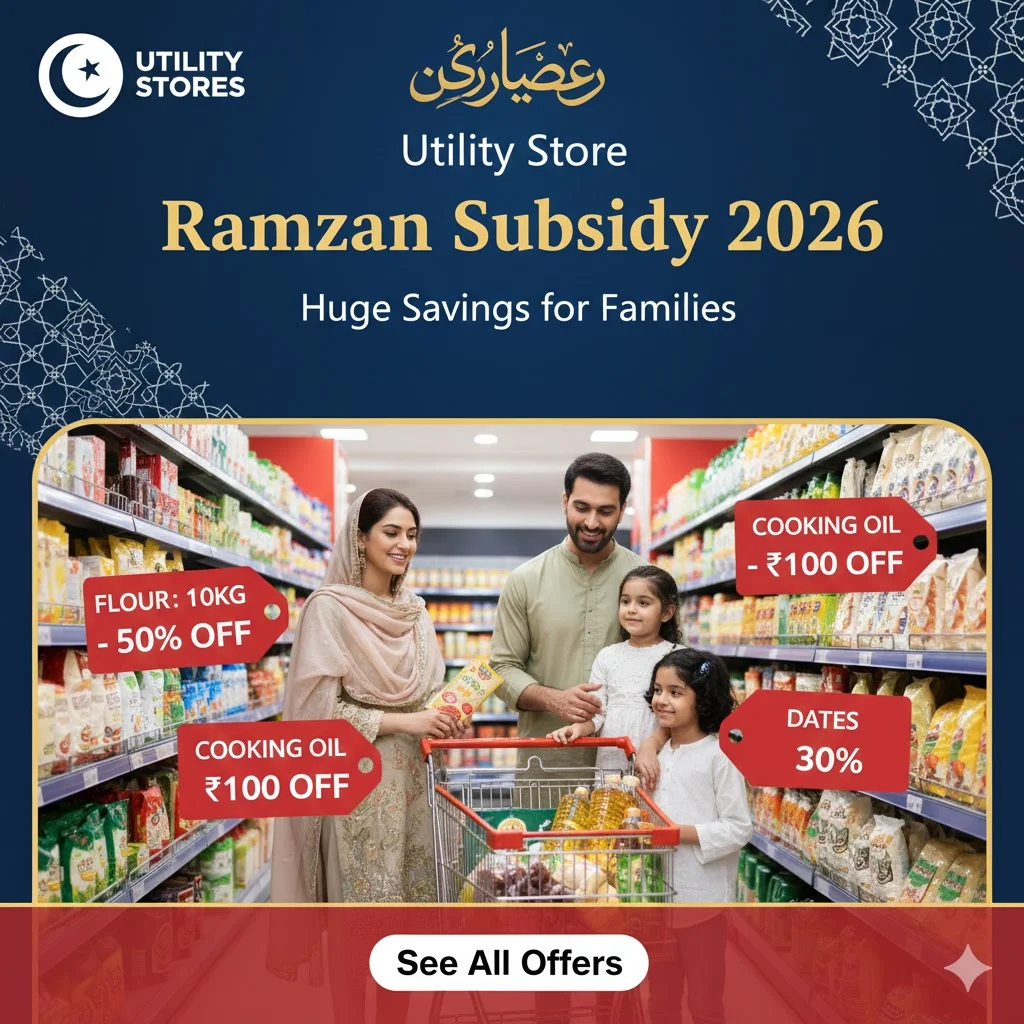
📜 Expected Subsidized Item List at Utility Stores – Ramzan 2026
While the official USC item price list for 2026 has not been fully published publicly yet, based on the typical pattern for Ramadan subsidy packages and verified government relief program outlines, the following essential food items are generally included under the Utility Store Ramadan Subsidy or related ration packages:
🥖 Staple Food Commodities
- Wheat Flour (Atta) – subsidized rate per kg
- Sugar – subsidized per kg
- Rice (Various types) – subsidized per kg
- Cooking Oil & Ghee – subsidized per litre/kg
- Pulses (Daal):
- Daal Channa
- Daal Masoor
- Daal Moong
- Gram Flour (Besan) – subsidized per kg
- Tea (Leaf) – subsidized packs
🫒 Other Grocery Essentials
- Dry Dates – staple for Iftar
- Tea – daily use beverage
- Milk & Tetra Pack Milk Products
- Spices and Cooking Essentials
📊 Typical Subsidy Details
These items are normally offered at fixed prices up to 10–15% lower than open-market rates during Ramadan relief campaigns. Subsidies focus primarily on daily-use staples to maximize impact on household budgets.
📍 How To Avail Ramzan Subsidy Items (2026)
To benefit from the Ramzan Subsidy package, eligible citizens usually register and verify their CNIC through designated SMS codes or online portals connected with welfare programs such as:
📩 8070 – Punjab Negahban / Rashan Card
📩 9999 / 8123 / 8171 – Federal relief & Ehsaas Rashan eligibility checks
Once verified, families can:
✔ Shop subsidized food items at authorized points (including Utility Stores or subsidized outlets).
✔ Claim cash or ration support as per program eligibility.
✔ Use Rashan Cards to purchase staples at controlled rates (this varies by province and subsidy program type).
📊 Key Points to Remember
- Subsidized items are mainly essential food staples used daily during Ramadan.
- Actual prices and quantities can vary based on stock and the specific household eligibility program.
- The 30-plus year old Utility Store system was phased out in 2025, but subsidized item distribution continues via digital relief channels.
🧠 Final Thoughts
The Utility Store Ramzan Subsidy 2026, as part of the broader Ramadan relief program, continues the tradition of helping vulnerable families offset rising food costs during the holy month. While payment methods and delivery mechanisms have evolved, the core focus remains on making essential food items more affordable through controlled prices and targeted support, ensuring that the spirit of Ramadan — generosity, community support, and empathy — is reflected in policy as well.